By
By
A recent executive order from the White House marks a notable shift in how the federal government approaches psychedelic medicine, moving the category further into mainstream policy discussion and signaling increased urgency around the U.S. mental health crisis.
While the order does not legalize psychedelic substances or bypass established regulatory frameworks, it introduces a series of initiatives aimed at accelerating research, improving regulatory coordination, and expanding potential access pathways for investigational therapies.
A Policy Shift Toward Acceleration, Not Deregulation
The executive order directs federal agencies (including the U.S. Food and Drug Administration, Department of Health and Human Services, and Drug Enforcement Administration) to coordinate efforts that may reduce friction in the development and review of psychedelic therapies.
Areas of focus include:
- Priority regulatory pathways for psychedelic compounds that have already received breakthrough therapy designation
- Expanded “Right to Try” access, enabling certain patients to pursue investigational treatments outside traditional trials
- Earlier rescheduling review, potentially shortening the gap between clinical success and real-world availability
- Increased federal funding and collaboration, including support for clinical trials and research infrastructure1
These efforts do not bypass traditional regulatory safeguards. Any potential therapies must still meet established standards for safety and efficacy before reaching broader patient populations.
Why This Is Happening Now
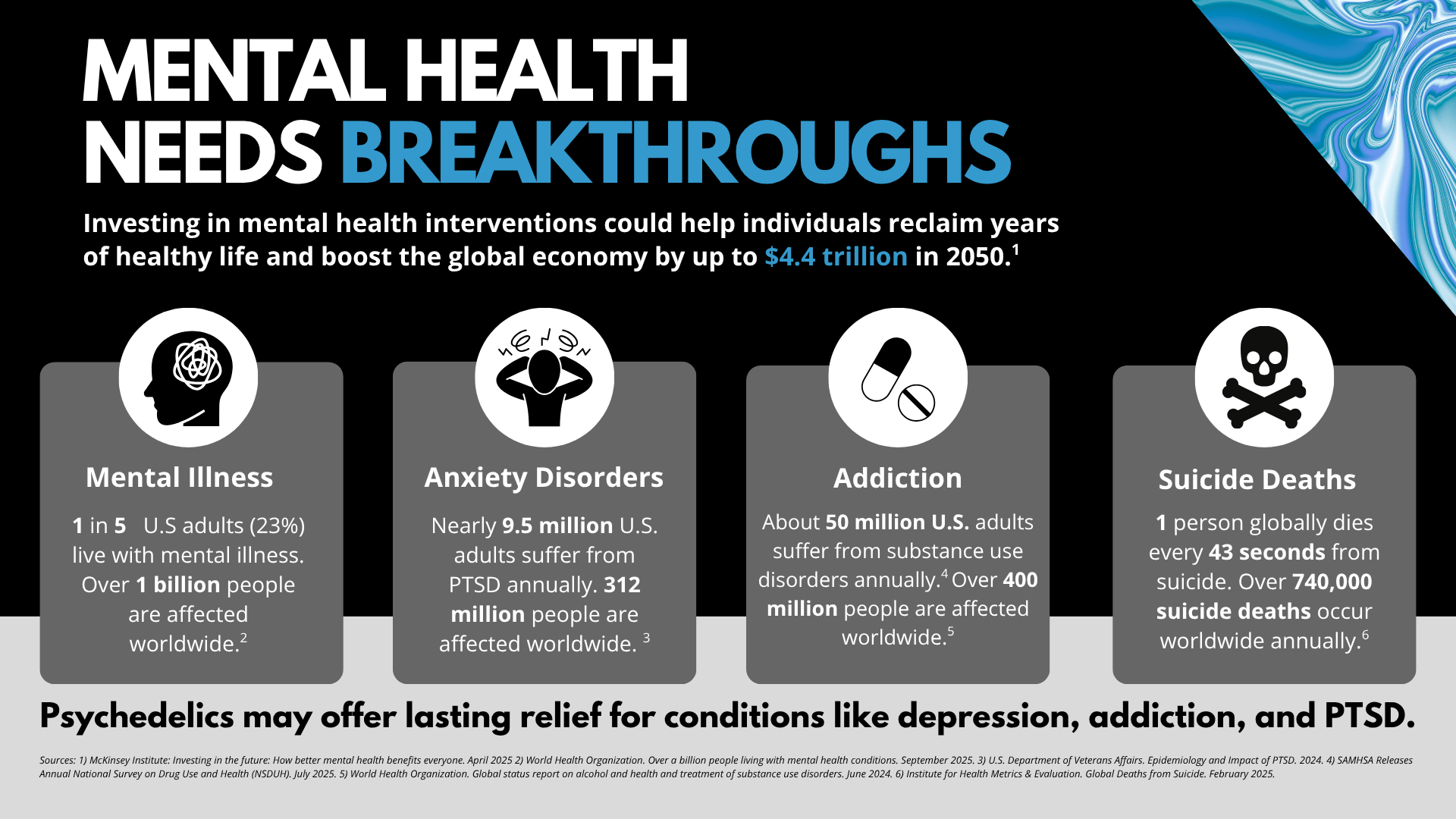
The renewed policy attention comes at a time when mental health challenges remain both widespread and difficult to treat effectively. Conditions such as Post Traumatic Stress Disorder (PTSD), major depressive disorder, and substance use disorders continue to present limitations for existing treatment options.
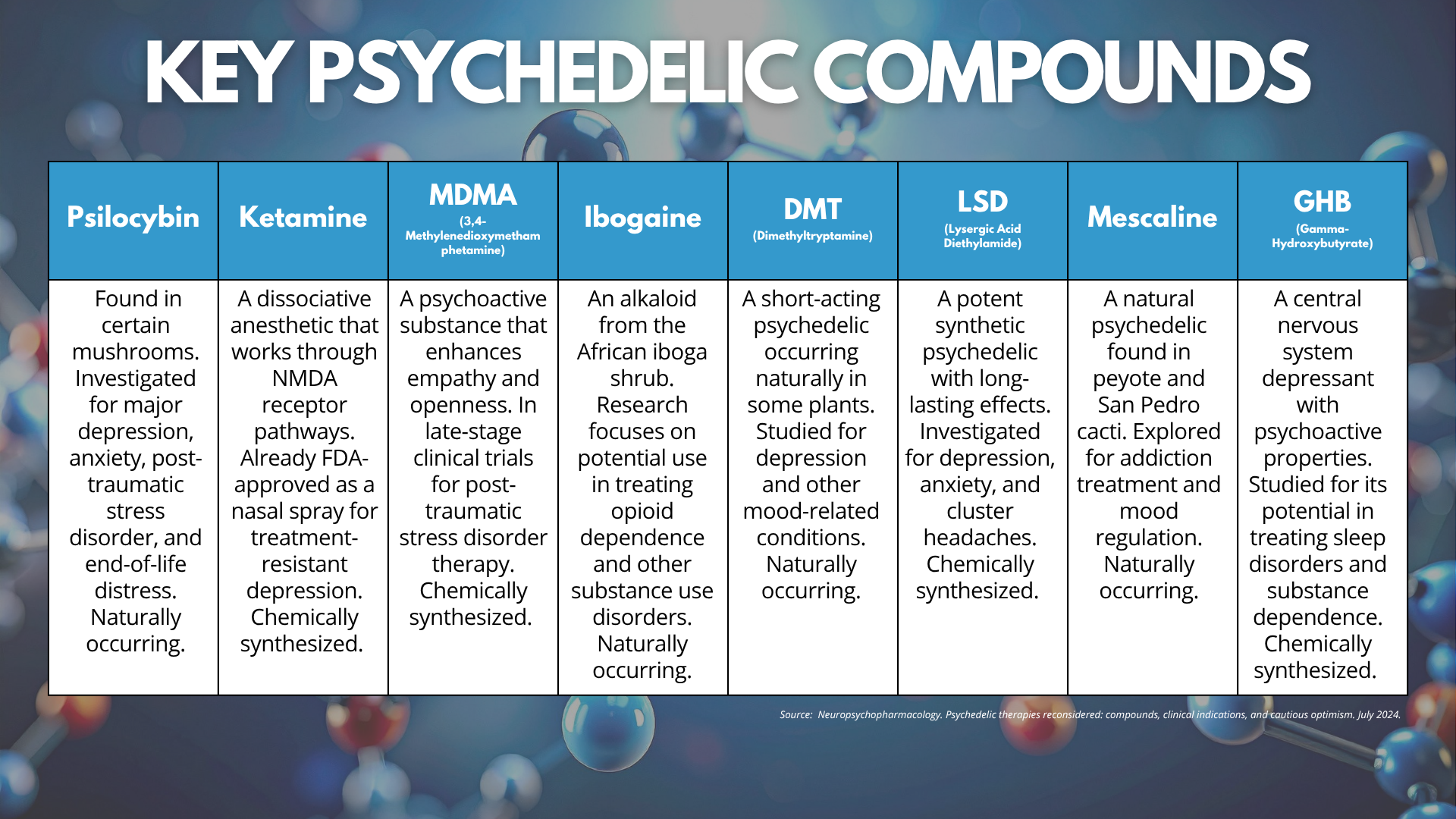
Psychedelic compounds, including psilocybin, MDMA, and ibogaine, have generated increasing interest due to early clinical data suggesting:
- Measurable effects in shorter treatment windows
- Possible stability of remission following limited dosing
- Alternative treatment options for patients unresponsive to existing standard therapies2
The science remains evolving, and does not bypass traditional regulatory safeguards. Any potential therapies must still meet established standards for safety and efficacy before reaching broader patient populations
A Signal to Markets and Industry Participants
From a potential investment perspective, federal engagement may be interpreted as a signal of increasing legitimacy, particularly for companies focused on the psychedelic therapeutic development space.
Early market reactions suggest that investors are beginning to view the category as increasingly “investable,” with policy support helping to de-risk certain aspects of the development pathway and stigmatisms associated with these compounds.
Policy alignment can influence:
- Access to capital, as clearer pathways may reduce perceived uncertainty
- Strategic partnerships, including collaboration between research institutions and private firms
- Pipeline prioritization, especially for therapies already in advanced clinical stages3
It is important to recognize that these developments do not eliminate risk. Clinical outcomes, regulatory decisions, health insurance coverage and payment policies, and operational infrastructure are all likely to influence the pace and scale of adoption as psychedelic therapies continue to transition from historically stigmatized use toward broader clinical implementation.
What This Means Going Forward
The executive order reflects a broader shift: psychedelic medicine is increasingly being evaluated through a science-driven, regulatory-first lens, rather than as a fringe or purely experimental category.
For the healthcare landscape, this may contribute to a more diverse set of treatment options over time, particularly for patients who have not benefited from traditional approaches.
For investors, it emphasizes a theme that continues to develop, policy momentum can act as an accelerant, but it does not replace the fundamental drivers of long-term clinical success, regulatory approval, and large-scale adoption.
Sources:
- Federal agency directives and executive order provisions related to mental health and therapeutic development
- Clinical research observations on psychedelic-assisted therapies for mental health conditions
- Market and industry analysis on capital formation and regulatory signaling in emerging biotech sectors
|
— For Institutional Investor Use Only. Not for Public Distribution —
|
| Before investing you should carefully consider the Fund’s investment objectives, risks, charges and expenses. This and other information is in the prospectus and summary prospectus, a copy of which may be obtained by visiting the Fund’s website at www.AdvisorShares.com. Please read the prospectus carefully before you invest. Foreside Fund Services, LLC, distributor. An investment in the Funds is subject to risk, including the possible loss of principal amount invested. The risks associated with each Fund include the risks associated with the underlying ETFs, which can result in higher volatility, and are detailed in each Fund’s prospectus and on each Fund’s webpage. AIL-921834-2026-04-20 |
.png)
.png)